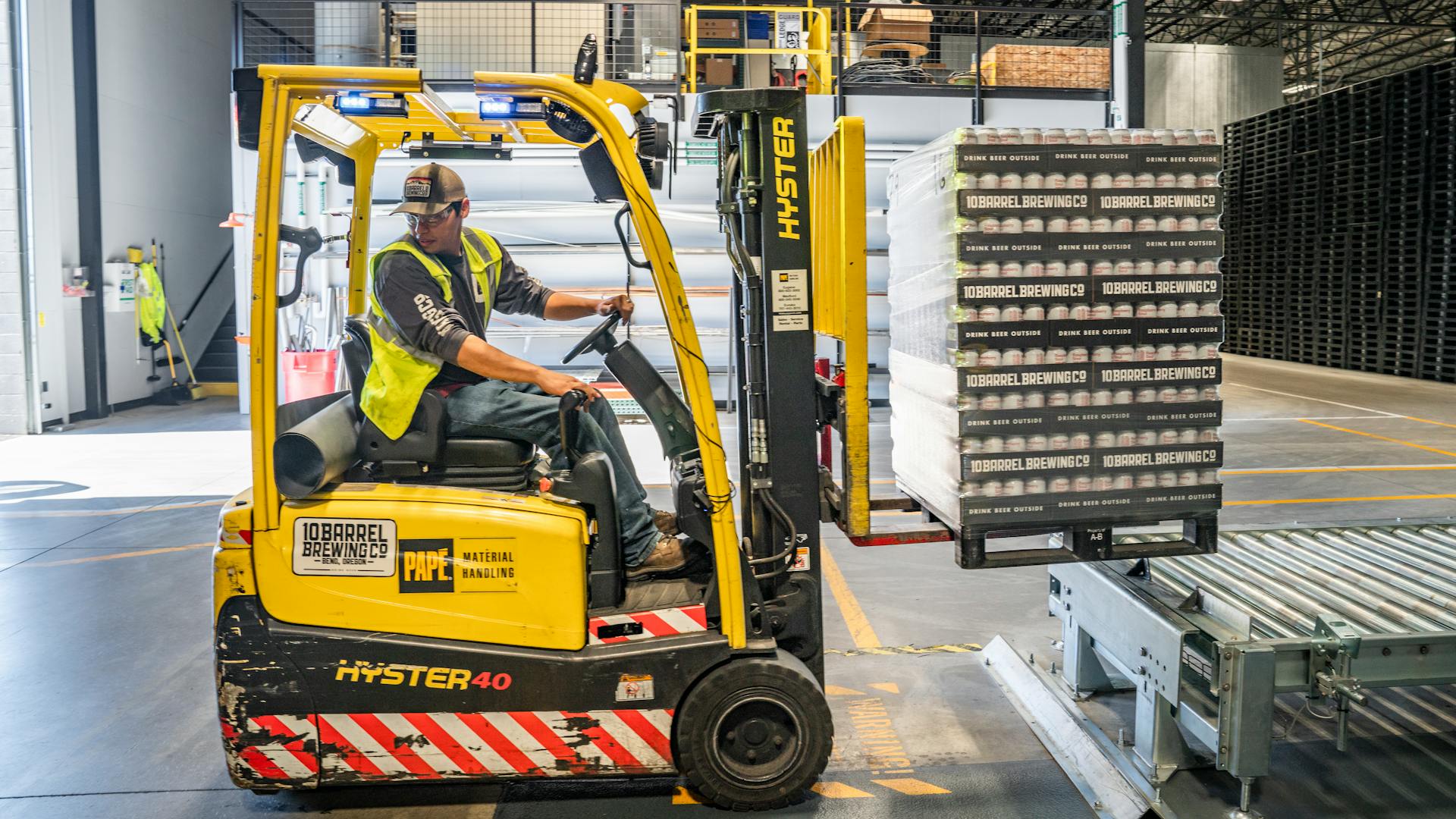
Manage Inventory to Protect Cash Flow
Too much inventory ties up cash. Too little means stockouts and lost sales. Getting inventory management right is a competitive advantage.
What This Means For Your Brand
Inventory management sits at the intersection of operations and finance. Every dollar tied up in unsold inventory is a dollar that cannot be spent on marketing, product development, or growth. For early-stage brands with limited capital, inventory efficiency is not just an operational nicety — it is a survival requirement. The brands that manage their inventory well scale faster and are more financially resilient than those that do not.
Stockouts are the other side of the inventory problem, and they are often more damaging than excess inventory in the short term. A customer who cannot buy your product will buy a competitor's. An Amazon listing that goes out of stock loses ranking that can take months to recover. A retailer that runs out of stock because you could not fulfill a replenishment order may not give you a second chance. Preventing stockouts through disciplined forecasting and reorder point management directly protects revenue.
The inventory challenge is compounded for beauty brands by minimum order quantities. Most contract manufacturers require production runs of 1,000 units or more, which means your minimum inventory increment is often larger than your immediate demand. Matching MOQ requirements against your sales velocity and cash position is one of the most important financial modeling exercises for any beauty brand founder.
Demand Forecasting
Demand forecasting uses your sales history, marketing calendar, and trend signals to predict how much inventory you need and when. Even a simple rolling average forecast is better than intuition alone. Brands that invest in forecasting accuracy — even basic spreadsheet-level forecasting in the early stages — consistently outperform those that manage inventory reactively.
Reorder Points
A reorder point is the inventory level at which you trigger a new production run. It is calculated from your lead time, your average daily sales rate, and the safety stock buffer you want to maintain. Setting reorder points correctly prevents the two most expensive inventory errors: running out of stock during peak demand, and sitting on excess inventory that ties up cash.
Inventory Turns
Inventory turnover — the number of times you sell through your entire inventory in a year — is a direct measure of inventory efficiency and a key driver of return on invested capital. Beauty brands typically target four to eight turns per year. Low turns indicate excess inventory tying up cash; high turns indicate you may be running too lean and risking stockouts.
How We Support This Step
We provide our clients with transparent production lead times and scheduling information, which is the foundation of accurate inventory planning. We offer flexible MOQ structures for established clients and can work with you to schedule production runs that align with your inventory cycle and cash flow position rather than defaulting to the maximum batch size.
Our production scheduling team communicates proactively about capacity and timeline so that you can plan your inventory position with confidence. We also maintain detailed batch records and finished goods documentation that support your inventory management and accounting processes, whether you manage inventory in-house or through a third-party logistics partner.
Explore Our Services
We manufacture across five beauty and personal care categories from a single GMP-certified facility.
Built for Every Stage of Growth
Whether you are launching your first SKU or scaling an established line, we have a solution for your stage.
Startup Brands
Low MOQ, guided development, and end-to-end support for first-time founders bringing a product to market.
Learn MoreEstablished Brands
Scale production, add SKUs, and maintain consistent quality across larger runs.
Learn MorePrivate Label
Choose from our proven formula library, customize it, and brand it as your own.
Learn MoreContract Manufacturing
Bring your formula. We handle production, QC, and delivery at scale.
Learn MoreWhite Label
Off-the-shelf products, ready to ship under your brand with minimal lead time.
Learn MoreBook a Free Strategy Call
Pick a time that works for you. We'll walk through your product vision, answer every question, and map out your path to launch — no pressure, no obligation.
Having trouble loading the calendar? Click here to open it in a new window.